









New Standard for Intelligent Floor Surface Inspection: What It Means for Automated Flooring Production
As flooring production becomes more automated, quality inspection is also moving from manual checking to intelligent online inspection.
In 2026, the new Chinese group standard T/CADBM 96—2026, Intelligent On-line Floor Surface Quality Inspection Equipment, was officially released. The standard was published on May 6, 2026 and came into effect on August 6, 2026.
The standard provides technical requirements for intelligent online inspection equipment used in flooring production and reflects an important development in the flooring industry: automation is expanding from production and packaging to online quality control.
For SPC, LVT, PVC and other flooring manufacturers, this means that future production lines can become more integrated, combining raw material handling, flooring production, online inspection, packaging and palletizing into one automated manufacturing process.

What Is Intelligent Online Floor Surface Inspection?
According to T/CADBM 96—2026, intelligent online floor surface inspection equipment uses optical cameras and image processing software to continuously and automatically analyze the surface quality of flooring products on the production line. The standard mainly applies to PVC-based flooring, while other flooring materials can also refer to its requirements.
Instead of relying only on workers to visually inspect every flooring plank, an intelligent inspection system can continuously monitor products while the production line is running.
The standard divides inspection equipment into three main types:
- Vertical panel inspection equipment
- Horizontal panel inspection equipment
- Roll inspection equipment
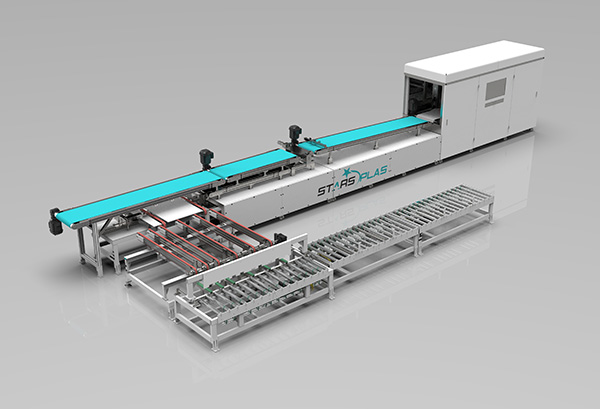
It also defines key components including the conveying system, control system, inspection system and rejection system. The inspection system includes an image processing unit and vision inspection system.
What Flooring Defects Can Be Detected?
Floor surface defects can directly influence the appearance and final quality of SPC, LVT and PVC flooring.
The new standard identifies several typical surface defects, including:
Folds, pits, crystal points, bubbles and impurities, as well as more serious defects such as damaged panels and insect-related defects.
The vision inspection system uses high-resolution cameras to collect surface images from different inspection positions. The software can then automatically identify and classify different defects.
For flooring factories with high production speeds, this can help reduce dependence on manual inspection and provide more consistent quality control.
Higher Requirements for Inspection Accuracy
One of the important parts of T/CADBM 96—2026 is the requirement for inspection accuracy.
According to the standard, the machine inspection accuracy should be:
≥95% for slight defects and ≥98% for critical defects.
For plank flooring, the difference between the machine-counted quantity and the actual quantity should not exceed 0.3%. For roll flooring, the difference between the detected length and actual length should also not exceed 0.3%.
This shows that online inspection equipment is becoming more than a simple camera installed above a conveyor. It is developing into an important part of the complete flooring production control system.
AI and Machine Learning Are Entering Flooring Production
Another interesting point in the new standard is the use of artificial intelligence and machine learning.
The inspection software should be able to switch detection parameters and models according to different product specifications, automatically identify and classify surface defects, display defect images and positions in real time, and store inspection images.
For new flooring specifications, the standard also mentions the use of AI and machine learning for deep learning before the new model is put into use.
This is especially useful for flooring manufacturers producing many different colors, patterns, dimensions and surface designs.
From Raw Materials to Finished Flooring: Automation Is Becoming More Integrated
For Starsplas, intelligent surface inspection is part of a much larger trend in flooring manufacturing.
A modern flooring factory is no longer only focused on increasing the speed of one machine. The complete production process needs better coordination between different systems.
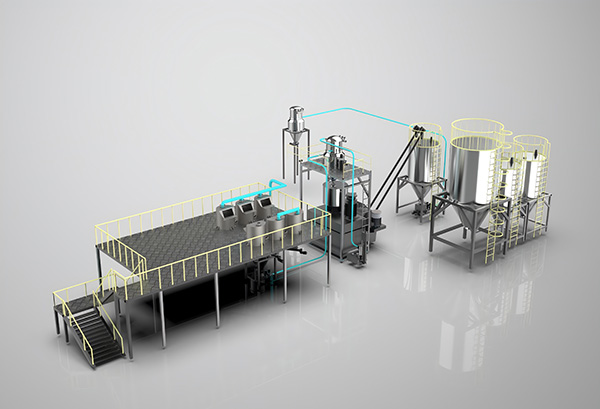
A typical automated SPC/LVT flooring factory can include:
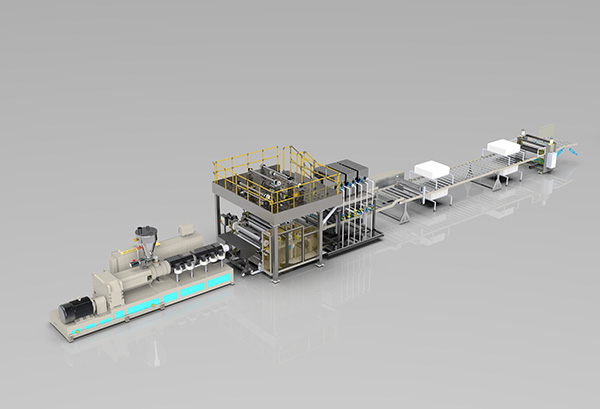
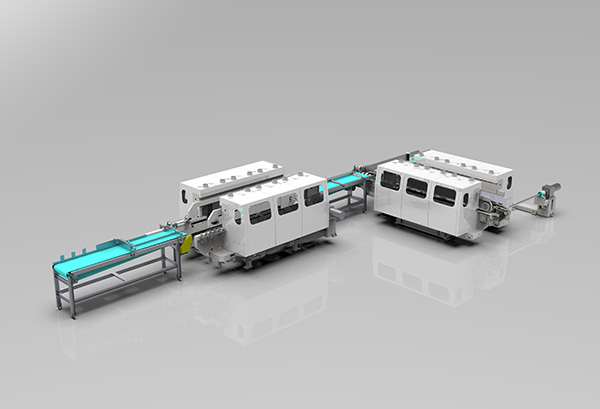
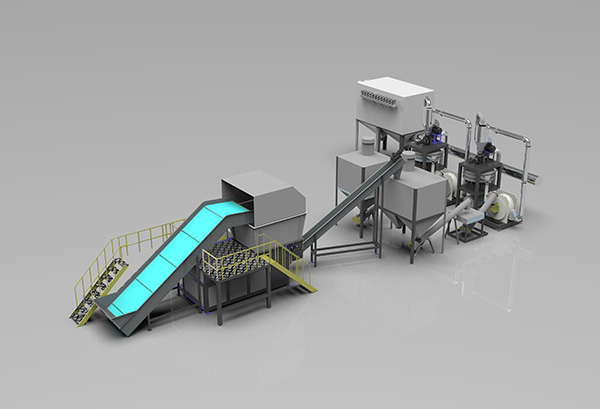
Automatic Raw Material Handling → Automatic Debagging → Conveying → Weighing & Dosing → Mixing → Flooring Production → EIR / Surface Processing → Online Quality Inspection → Automatic Packaging → Robotic Palletizing
This is also the direction of Starsplas flooring automation solutions.
For example, an Automatic Debagging Machine can automatically open and empty raw material bags before production, while a centralized Material Conveying and Weighing System can transfer PVC powder, calcium carbonate, additives and other materials to the mixing system.
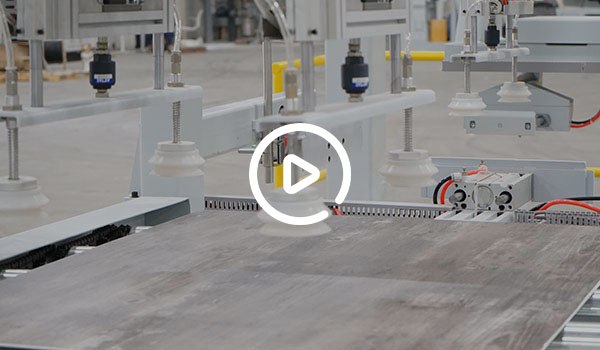
At the downstream side, an EIR Embossing System can help synchronize the decorative pattern and embossed surface, while an Automatic Flooring Packaging Line can complete carton forming, gluing, packing and palletizing.
When these systems are connected with online quality inspection, flooring manufacturers can gradually build a more complete automated production process.
Why Online Quality Inspection Matters for High-Speed Flooring Lines
As production capacity increases, manual inspection becomes more difficult.
Workers need to continuously check fast-moving flooring products, while small surface defects may be difficult to identify consistently over a long production shift.
An intelligent inspection system can work continuously with the production line and provide several advantages:
More consistent inspection – The same inspection parameters can be applied continuously during production.
Real-time defect detection – Defect images and positions can be displayed immediately.
Automatic rejection – Defective flooring can be separated from qualified products through the rejection system.
Production data collection – The software can record production quantity, qualified product ratio, defect quantities and historical inspection information.
The standard specifically requires the software to provide statistical functions covering production quantity or length, finished-product quantity and proportion, different defect quantities and proportions, as well as historical inspection data for up to two years.
Building a Smarter SPC and LVT Flooring Factory
The release of T/CADBM 96—2026 shows that intelligent inspection and digital quality control are becoming increasingly important parts of flooring manufacturing.
For flooring producers, automation should not be considered as one independent machine at a time.
From automatic raw material feeding and debagging, to weighing, mixing, flooring production, EIR processing, quality inspection, packaging and palletizing, connecting each process can help factories reduce manual handling and improve production consistency.
Starsplas provides customized automation solutions for SPC, LVT, PVC and other flooring production plants, including raw material handling systems, automatic debagging equipment, conveying and dosing systems, EIR systems, automatic flooring packaging lines and related production equipment.
For new flooring factories or existing production line upgrades, Starsplas can design the system according to the customer’s production capacity, material characteristics, plant layout and automation requirements.


 Head Office
 Our Tel
 Our Email
